Caracal and Germany’s Merkel Redefined the Global Firearms Market
In the world of defense and sporting arms, few events hold as much weight as the Abu Dhabi International Hunting and Equestrian Exhibition (ADIHEX). The 2019 edition of this event not only showcased cutting-edge innovations but also represented a powerful symbol of international collaboration between East and West. Among the standout names that year were Caracal International, the UAE’s flagship firearms manufacturer, and Merkel, a renowned German rifle maker. Together, these two companies illustrated how technology, craftsmanship, and shared vision can transcend borders to shape the global arms industry.
A Global Stage for Regional Innovation
ADIHEX 2019 was held in early September at the Abu Dhabi National Exhibition Centre, and it drew visitors, collectors, and defense experts from across the world. What set the 2019 event apart was not only the impressive attendance but also the sense of strategic evolution within the Middle Eastern defense industry. The UAE had been steadily investing in local production capabilities through the Emirates Defense Industries Company (EDIC), which at the time served as an umbrella organization uniting several national defense firms — including Caracal.
For years, Caracal had been known for developing small arms that met both military and civilian needs. Their portfolio included pistols, submachine guns, and precision rifles. But by 2019, their ambitions had evolved — Caracal was no longer just a regional supplier; it had emerged as a symbol of the UAE’s growing influence in global arms manufacturing.
Caracal’s Rise as a Symbol of Modern Emirati Defense Manufacturing
When Caracal first entered the scene in 2007, few expected the company to rise so quickly. Yet by 2019, it had already achieved several international milestones. Its small arms were in active use by law enforcement agencies and armed forces across the Middle East, Africa, and parts of Asia.
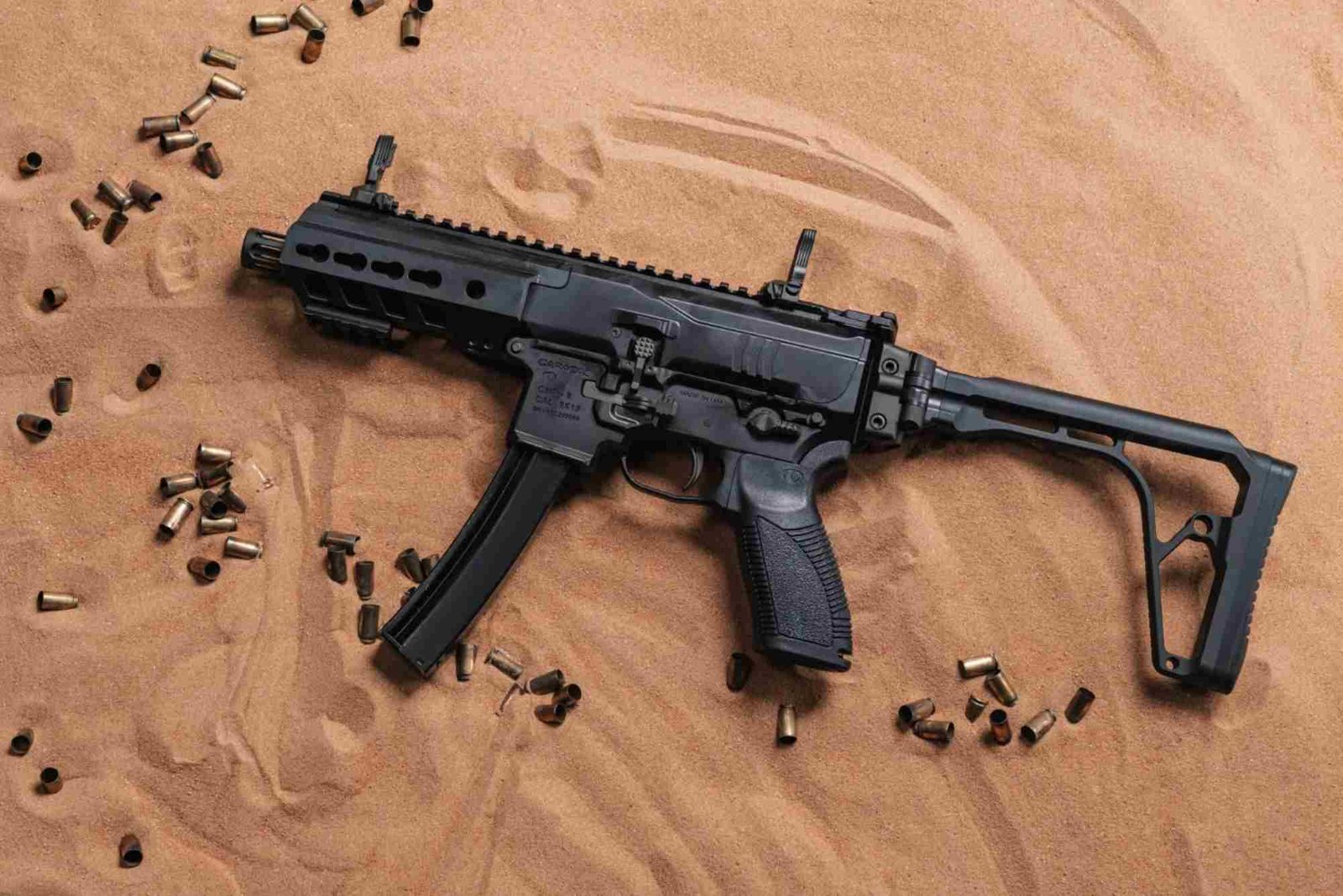
At ADIHEX 2019, Caracal’s display served as a testament to the company’s technical prowess and design innovation. Firearms such as the CAR 816, a modular assault rifle, and the CAR 817 AR, chambered in 7.62mm and CAR 308 were among the highlights. Both had gained international attention for their reliability under extreme desert conditions — a point of pride for a company born in the harsh climate of the Arabian Peninsula.
Caracal also emphasized its growing commitment to research and development. Engineers had been refining ergonomics, recoil management, and modularity to meet NATO standards while maintaining the simplicity favored by regional operators. This balance between performance and practicality became one of Caracal’s strongest competitive advantages.

Merkel: A Century of German Craftsmanship Meets Modern Industry
While Caracal represented modern innovation, Merkel embodied tradition. Founded in 1898 in Suhl, Germany, Merkel had more than a century of experience in producing high-end hunting rifles and shotguns. The company’s reputation was built on meticulous craftsmanship, precision engineering, and the timeless elegance of its firearms.
At ADIHEX 2019, Merkel’s participation was not merely about showcasing its products — it was about emphasizing its partnership with the UAE’s EDIC group. This collaboration allowed Merkel to benefit from Caracal’s manufacturing efficiency and regional distribution networks, while Caracal and EDIC gained access to Merkel’s deep-rooted expertise in firearm design and quality control.
Among Merkel’s featured products were their renowned Helix series of bolt-action rifles, known for their quick-change barrel system, smooth operation, and modular design. The rifles appealed not only to hunters but also to professional marksmen who appreciated the blend of innovation and heritage.
EDIC’s Role in Uniting Global Expertise
The Emirates Defense Industries Company (EDIC), which was later consolidated into the EDGE Group, played a pivotal role in connecting Caracal and Merkel under a shared industrial vision. EDIC’s strategy was straightforward but ambitious: build a sustainable, export-oriented defense manufacturing base in the UAE by merging world-class engineering with Emirati innovation.
By the time of ADIHEX 2019, EDIC’s presence had become a clear statement that the UAE was no longer content with being merely a buyer of defense technology — it wanted to be a builder, exporter, and innovator. The company’s portfolio ranged from small arms and ammunition to advanced aerospace and naval systems. Caracal and Merkel’s partnership fit perfectly into this vision of technological independence and international collaboration.
Showcasing Innovation Beyond Firearms
ADIHEX 2019 wasn’t just a trade fair — it was a celebration of culture, heritage, and innovation. The event brought together diverse sectors like hunting, equestrian sports, and outdoor adventure equipment. This unique blend of tradition and technology gave it a distinctive appeal, particularly for brands like Merkel that had deep roots in hunting culture.
Caracal’s booth stood out for its clean, modern presentation, while Merkel’s exhibit drew attention for its classic aesthetic and handcrafted rifles. Visitors could see, in one exhibition hall, two different philosophies of firearms manufacturing — one representing cutting-edge modernity, the other timeless craftsmanship. Yet both were united by a shared commitment to precision and performance.
International Impact and Legacy
Although the 2019 exhibition has long passed, its influence continued to shape the firearms landscape in subsequent years. For Caracal, the event solidified its reputation as a serious global player. Its continued expansion into European and Asian markets reflected the confidence gained from such international exposure.
For Merkel, ADIHEX 2019 marked a milestone in deepening its global relationships, particularly with Middle Eastern markets that valued both luxury and functionality. The collaboration with EDIC and Caracal demonstrated how legacy manufacturers could thrive by adapting to new industrial ecosystems without compromising their heritage.
Bridging Cultures Through Technology
Perhaps the most lasting impact of ADIHEX 2019 was its role in bridging cultural and industrial divides. The collaboration between UAE’s Caracal and Germany’s Merkel was more than a business partnership — it was a dialogue between two worlds: one defined by youthful ambition and rapid modernization, the other by centuries of precision and craftsmanship.
That dialogue continues to resonate. In the years following ADIHEX 2019, global defense exhibitions increasingly showcased joint ventures, technology transfers, and multinational development projects. The success of the Caracal–Merkel relationship served as a model for how nations could merge industrial capabilities while preserving cultural identity.
The Evolution Toward EDGE and the Future Ahead
Not long after ADIHEX 2019, the UAE consolidated several of its defense companies under the EDGE Group, a move that positioned the nation among the world’s top defense innovators. Caracal became one of EDGE’s key subsidiaries, continuing to represent the UAE’s strategic vision for advanced manufacturing and self-reliance.
For Merkel, the partnership allowed it to access new markets and apply its engineering expertise in collaborative research initiatives. While ADIHEX 2019 is now a part of history, the foundations laid during that period continue to influence both companies’ trajectories.
Conclusion
The story of ADIHEX 2019, and the collaboration between Caracal, Merkel, and EDIC, is more than a snapshot of a single exhibition — it’s a case study in how global cooperation can redefine industries. The event demonstrated that innovation thrives when tradition meets ambition, and that nations willing to invest in shared expertise can achieve technological sovereignty without sacrificing quality or heritage.
As the defense world continues to evolve, the spirit of ADIHEX 2019 remains a reminder that collaboration, not competition, often leads to the most enduring breakthroughs. The legacy of that year’s exhibition still echoes in the halls of both Abu Dhabi and Suhl — two cities bound by a shared pursuit of excellence, separated by geography but united by craftsmanship and vision.